

2016-05-30 00:00:00
The Equal Representation in Arbitration (ERA) Pledge is a call for the international arbitration community to commit to increase, on an equal opportunity basis, the number of women appointed as arbitrators. We aim to achieve fair representation as soon as practically possible, with the ultimate goal of full parity.
Read the Commentary to the Pledge.
Take the Pledge signed by thousand of individuals, firms and organisations (see signatories list).
The Pledge Steering Committee members are listed here.
The Pledge also offers a Search for Female Arbitrators feature; click here to go to the Search page.
If you have any further questions please use the Contact us page here.
2016-05-21 00:00:00
NEW YORK, NEW YORK, May 18, 2016 – The AAA-ICDR Foundation is now accepting proposals for its second funding cycle. Interested organizations or individuals should submit a 1-2 page Initial Description of Grant Request no later than October 14, 2016 go to www.AAAICDRFoundation.org for process and forms.
The American Arbitration Association (AAA®) and its international division, the International Centre for Dispute Resolution (ICDR®), announced the establishment of the AAA-ICDR FoundationTM in May 2015. Since that time, the Foundation Board: James R. Jenkins, India Johnson, John J. Kerr, Jr., Carolyn Lamm, Francis McGovern, Bruce Meyerson, and Board Chair Edna Sussman along with AAA/ICDR support staff have been hard at work in both the areas of grant making and fundraising.
The Foundation is a 501(c)(3) not-for-profit organization, and is able to solicit donations and provide grants to fund a range of worthy causes that promote the Foundation’s wide-reaching mission, which is to support the use and improvement of dispute resolution processes in the USA and internationally, including:
- Fostering measures that reduce potential escalation, manage, and resolve conflicts.
- Expanding the use of dispute resolution processes tailored to the conflict.
- Supporting research, education and initiatives promoting high quality, efficient and fair dispute resolution.
- Increasing access to justice in and through alternative dispute resolution.
- Encouraging collaborative processes to resolve public conflicts.
- Sharing expertise across diverse groups and cultures.
- Partnering with others dedicated to advancing the Foundation’s mission

2016-04-29 00:00:00
On March 16, 2016, ArbitralWomen held it’s second International Women’s Conference. Over one hundred women from around the world with practices in alternative dispute resolution attended this Congress at UNESCO House in Paris, France. The Congress, entitled "Improving the Role of Women in Dispute Resolution: Evolution or Revolution?" examined the evolving role of women in international arbitration and ways in which to expand that role. Women judges, arbitrators, advocates, and experts greeted old friends and made new ones as they shared practice tips, substantive information, mentoring help, and friendship. More information about ArbitralWomen including how to seek membership is available from its exciting new, user-friendly website.
The full day of programmes, presented all in English, was organized around five substantive panels and several networking breaks. The day concluded with a dinner in the beautiful UNESCO dining room with breathtaking views of Paris.
The day began with a welcome from ArbitralWomen’s President, Rashda Rana, SC FCIArb. Ms. Rana set the tone of the day and introduced the plenary speaker, Hillary Heilbron, QC, of Brick Court Chambers, UK. Keeping with the theme of the day, Ms. Heilbron focused clearly and directly on how the role of women in the field of ADR, in particular arbitration, has evolved, how the role of women might be expanded in the future, and how as a community of institutions, practitioners, and individuals we might support that effort.
International Arbitration is a highly competitive practice area. Many lawyers seek to enter this practice area. Few are successful. Not surprisingly, most international arbitrations continue to be decided by the same small cadre of older white men. The challenges for entry, while difficult for all, continue to be even more difficult for women and minorities. Historically, whenever women have sought to enter a male-dominated practice area, they have faced entry barriers due to implicit and explicit bias, as well as an embedded status quo. This is the situation still confronted by women in international arbitration. Although Ms. Heilbron unflinchingly outlined the challenges women face, her message nevertheless was encouraging and replete with practical advice.
Consistent with the theme of the Congress, Ms. Heilbron’s remarks went beyond identifying the problems and raising awareness, she also offered constructive suggestions for changing the status quo. She outlined suggestions for raising one’s professional profile and visibility. She encouraged women to take positive steps to raise their profiles by seeking out opportunities to publish and to speak. She suggested that those seeking to raise their profile and visibility might accept the pro bono role as Secretary to an Arbitral Tribunal. With a nod to ArbitralWomen, she recognized the important role of active participation in Associations and Professional Societies as well as the fact that women may need to work harder than their male counterparts to achieve parity.
Women supporting women was a recurring theme of the Congress. Notwithstanding the demands of clients and partners, the delegates were repeatedly reminded of the importance of helping and encouraging one another. Awareness was raised to resist any inclination to fall into the "mean girl," judgmental female stereotype. Madeleine Albright, former Secretary of State of the United States’ well-known quote was also repeated: "There is a special place in hell for women who do not help other women."
Following Ms. Heilbron’s plenary address there were five panel presentations. The first, entitled "Evolution vs. Revolution" examined the current state of women in international arbitration. ArbitralWomen’s President, Rashda Rana moderated this panel and framed the conversation regarding the appropriate process for achieving change and greater diversity in the area of international arbitration. Juliette Fortin, FTI Consulting, France, provided a statistical context which showed that some small measure of progress had been accomplished over the years even though women continue to be underrepresented as arbitrators and as partners in law firms where international arbitration is practiced. The progress made must be viewed in context. Although the statistics demonstrate an increase in international arbitration cases in which women are included on the panel, 75% of all ICSID appointments of women to international arbitration panels are filled by just two women. Quotas have been only partially successful in addressing this problem due in part to those who take a "check the box" approach.
The panel also identified ways in which women may be undercut and disadvantaged in this field. Women are often hurt by conscious or unconscious reactive devaluation referred to informally as "mansplaining." A suggestion in a meeting put forth by a woman and either overlooked or outright rejected may be repackaged later by a man at which point it is warmly embraced.
In spite of the statistics, the trajectory is favorable and the panel discussed positive steps that might be considered for improving the situation. One intriguing option discussed by Erin Miller Rankin of Freshfields, Bruckhaus Deringer of Dubai was “anonomized CV's.” When an initial list of potential arbitrators had been assembled at her firm for a particular arbitration. Ms. Rankin first made sure the “short list” included qualified women. Next, prior to making either a recommendation or selection, all reference to gender or diversity was removed from each potential arbitrator's CV. When the client chose the arbitrator, the selection was made on merit with no possibility for implicit bias. In this instance, the client in fact selected women among the final potential arbitrators. This is comparable to blind auditions where the prospective candidates for an orchestra audition from behind a curtain. This technique has had a positive impact on the diversity of those orchestras employing this technique.
Women not only are often less likely to be selected to sit on International Arbitration Panels, but women also are less frequently selected to serve as Experts. A second panel“Experts and Lawyers: Building A Winning Combination” moderated by Clare Connellan of White and Case, UK, consisted of four highly qualified Quantum Experts who discussed best practices for advocates working with experts.
Preparation is key to working effectively with experts. Rather than increase costs, this measure alone can help reduce the ultimate expense of litigation by avoiding problems altogether. The expert can identify required information, provide accurate damage analysis, and, importantly, help avoid problems early before they are insurmountable.
The experts agreed that to be effective advocates should recognize that an expert works with them not for them. The role of the expert is to provide accurate and unbiased data and analysis. It is not to advocate on behalf of one position or another. The opinions of an expert who is perceived as a “hired gun” are ultimately less valuable and persuasive to the panel. All of the panelists agreed that while their objective was to help the advocate persuade the panel, maintaining their independence is an essential aspect of their ability to persuade.
There was a discussion of the technique of "Hot Tubbing" with experts where the experts are called jointly and permitted to exchange their views with one another rather than having their individual presentations follow one another. Most found this to be an effective technique. Usually, this helped the better-prepared expert to the disadvantage of the less prepared one.
Just as with seeking arbitral appointments, the advice for those seeking a career as an expert iswas to be authentic, network, work harder than anyone else, and then have confidence that you are prepared and can do the work.
There was also an entertaining mock arbitration in which those in the role of advocates and those in the role of arbitrators illustrated ethical dilemmas through the use of a role play, where the arbitrators and their counsel illustrated issues relating to bias caused by prior and ongoing relationships between or among the arbitrators and parties or their lawyers. There was also an issue as to the neutrality of party-appointed arbitrators who, in spite of how they should conduct themselves, nevertheless advocate on behalf of the party who appointed them. This mock arbitration successfully used humor to illustrate common ethical concerns of bias and conflicts of interest. The mock session was concluded by a discussion of the proper conduct and applicable rules.
The fourth panel involved a debate as to appropriate steps to help resolve the issues of diversity imbalance in international arbitration. The issue was whether or not formal quotas might be appropriate and necessary. The proposition was whether or not each international arbitration panel should be required to include at least one woman. It was a provocative, stimulating conversation regarding the pros and cons of quotas. At the conclusion, the delegates voted. The group was evenly divided as to whether or not this was an appropriate measure and the result of whether or not there should be a resolution is unclear.
The final panel was an incredibly helpful presentation by high ranking women in major arbitral centers who discussed the ongoing efforts of these institutions to address issues of diversity on their panels. Representatives from institutions on this panel were Mirèze Phillippe of the ICC and Sasha Carbone of ICDR. Although the problems persist, the affirmative efforts of these organisations to address this ongoing problem was encouraging.
These organisation representativesspoke of greater transparency regarding the composition of panels. Mirèze Phillippe discussed the measures adopted by the ICC to publish information concerning the demographics of the arbitrators sitting on its cases. Sasha Carbone discussed the similar efforts underway by the AAA/ICDR. All of the entities represented supported greater transparency and diversity to address the ongoing underrepresentation of women on international arbitral panels.
The Congress also consisted of networking breaks and lunch and many opportunities to compare notes with ADR practitioners from around the world. A lovely closing dinner was held in the imposing UNESCO dining room. At the dinner Mirèze Phillippe revealed the exciting new ArbitralWomen website which was supported by the generosity of its sponsors. The new improved website is highly interactive with greater content.
As more women enter this field, women will become less of an anomaly. The hope is to do whatever we can, whether on a large or small scale, to change the face of international arbitration and to expand the ranks of international arbitrators with talented, dynamic, highly qualified, capable women.
The next Congress will be held in 2018.
Joan Stearns Johnsen
Legal Skills Professor at the University of Florida
Levin College of Law
Commercial arbitrator, mediator, and trainer
This email address is being protected from spambots. You need JavaScript enabled to view it.
2016-03-11 00:00:00
By Mirèze Philippe, Board member
ArbitralWomen is delighted to publicise its new website offering new features for the international arbitration community. The website was presented at ArbitralWomen/CIArb International Conference at UNESCO House in Paris on “Improving the Role of Women in Dispute Resolution: Evolution or Revolution?” A special edition of the Newsletterdedicated to the conference, as well as photos are available on the new website.
The revamping of the website was a major project which required investing significant time and funds. This was made possible by sponsors whose generous funding allowed ArbitralWomen to undertake such an ambitious project:
This email address is being protected from spambots. You need JavaScript enabled to view it. .
We hope you will enjoy the new website, its features and the information it offers.
- Allen & Overy,
- Andrews Kurth,
- Brick Court Chambers,
- Clifford Chance,
- Debevoise & Plimpton,
- Freshfields Bruckhaus Deringer,
- Hogan Lovells,
- King & Spalding,
- Norton Rose Fulbright,
- Skadden Arps Slate Meagher & Flom,
- White & Case,
- Wilmer Cutler Pickering Hale & Dorr,
- and the Thomas Wälde Memorial Gift granted by his widow Charlotte Wälde.
2016-03-11 00:00:00
With the kind permission of GAR, authored by Lacey Yong
ArbitralWomen has created YAWP, the first young group for female practitioners only, with an international executive committee chaired by Gabrielle Nater-Bass, partner at Homburger in Zurich.
Nater-Bass, who is already Vice President of ArbitralWomen, tells GAR that Young ArbitralWomen Practitioners (YAWP) provides a networking platform for women below the age of 40 who are seeking to address challenges arising in the early stages of their practice. “Younger women are still building their careers and face issues such as establishing themselves in today’s very competitive and still male-dominated world of dispute resolution. Some may also be juggling a family and a career,” she says.
She hopes that YAWP will give women “comfort and confidence” and allow them to support each other as they share their concerns with others in a similar position. The group will also provide mentoring programmes and skill-building seminars.
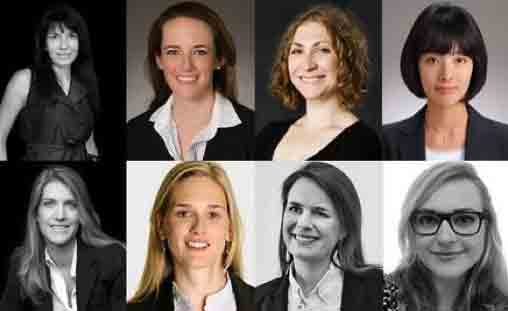
Aside from Nater-Bass, other members of YAWP’s executive committee are Kate Brown de Vejar, partner at Curtis Mallet-Prevost Colt & Mosle in Mexico City; Katie Hyman, associate at Akin Gump Strauss Hauer & Feld in Washington, DC; Melissa Magliana, counsel at Homburger in Zurich; Yoko Maeda, special counsel at City-Yuwa Partners in Tokyo; Annabelle Möckesch, associate at Hanefeld in Hamburg; Claire Morel de Westgaver, associate at Bryan Cave in London and Ema Vidak-Gojkovic, associate at Baker & McKenzie in Vienna.
At least two members of the committee bring experience of leading other young groups. Brown de Vejar’s two-year term as co-chair of Young ICCA comes to an end this year. Young ICCA is to hold an election soon to replace her and wants those interested in standing to register their interest.
Magliana is co-chair of the Swedish Arbitration Association’s below-40 group, ASA below 40.
All committee members will serve terms lasting two years or until they reach the age of 40. Nater-Bass will serve at least two years as chair to help establish the group.
YAWP celebrates its official launch with an event on 7 April in Zurich. Paula Hodges QC, head of international arbitration at Herbert Smith Freehills in London, will deliver the keynote speech.
The launch will be followed by the first YAWP conference on 8 April. The event, which is open to men and women, will consider how young practitioners can build an international arbitration career. Speakers and moderators will include ArbitralWomen’s president Rashda Rana QC and members of the YAWP executive committee, as well as Hodges, Inka Hanefeld of Hanefeld Rechtsanwälte, Isabelle Michou of Herbert Smith Freehills and Dutch arbitrator Vera van Houtte.
Membership of YAWP is automatic for ArbitralWomen members aged under 40. Those interested in joining are invited to first join the parent organisation using this application form.
On 9 February, Nater-Bass and committee member Claire Morel de Westgaver will speak at an event in London on how women thrive in international arbitration. GAR will report on the event.
YAWP executive committee members
• Gabrielle Nater-Bass (partner at Homburger) (Switzerland)
• Kate Brown de Vejar (partner at Curtis Mallet-Prevost, Colt & Mosle) (Mexico)
• Katie Hyman (associate at Akin Gump Strauss Hauer & Feld) (US)
• Yoko Maeda (special counsel at City-Yuwa Partners) (Japan)
• Melissa Magliana (counsel at Homburger) (Switzerland)
• Annabelle Möckesch (associate at Hanefeld Rechtsanwälte) (Germany)
• Claire Morel de Westgaver (associate at Bryan Cave) (UK)
• Ema Vidak-Gojkovic (associate at Baker & McKenzie) (Austria)
2016-03-10 00:00:00
By Dr. Ileana M. Smeureanu, Board member
The 64th session of UNCITRAL Working Group II (Arbitration and Conciliation) was held in New York from 1 to 5 February 2016.
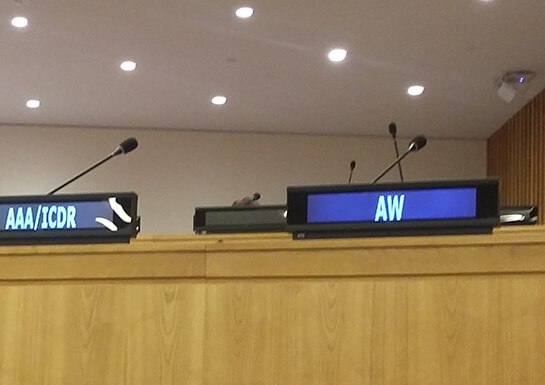
The session was attended by 56 states (38 members of the Working Group's Commission and 17 observers), observers from the Holy See and the European Union, one intergovernmental organization and 36 non-governmental organizations, in total some 210 persons. ArbitralWomen, represented by Dr. Ileana Smeureanu, participated for the first time since its accreditation.
The first part of the session finalized the discussions on the revision of the 1996 UNCITRAL Notes on Organizing Arbitral Proceedings under the presidency of Mr. Michael Schneider, an arbitration specialist from Lalive, Geneva. The second part of the session, dedicated to the enforcement of international commercial settlement agreements resulting from conciliation, was chaired by Ms. Natalie Yu-Lin Morris-Sharma, Deputy Senior State Counsel, Attorney-General's Chambers in Singapore.
During the second part of the session, the Working Group discussed the following topics:
- the notion of "international" settlement agreements;
- the notion of "commercial" settlement agreements, including exclusions and reservations; • settlement agreements resulting from "conciliation"; • settlement agreements reached during judicial or arbitral proceedings;
- definition of "settlement agreement";
- form and other requirements of settlement agreements;
- enforcement procedure and defenses to enforcement;
- the conciliation process and the content of settlement agreements.