
2019-03-19 00:00:00
To celebrate International Women's Day CIArb interviewed professionals from various jurisdictions, at different stages of their careers and asked them about their experiences as female practitioners in ADR. The interviewees talked about their incredible achievements as well as challenges they had to face. The excellent stories they shared can serve as an inspiration and empowerment for female practitioners around the globe.
It is worth noting that a number of the interviewees are proud members of ArbitralWomen. CIArb, a partner of ArbitralWomen, is delighted to support ArbitralWomen by presenting on its website inspiring profiles of its members; click here to view the page: https://www.ciarb.org/news/ciarb-women-in-adr-campaign-recognised-by-arbitralwomen.
CIArb is continuing to post interviews on its website and social media platforms; click here to view the interviews: https://ciarb.org/membership/international-womens-day.
The CIArbWomeninADR initiative started at the beginning of March coinciding with CPR’s Female Neutral initiative which was launched in Washington on 8 March 2019. ArbitralWomen had also launched on 8 November 2018 in New York the book on Women Pioneers in Dispute Resolution. These three initiatives about role models and female practitioners in dispute resolution sharing their experience will hopefully be inspirational to other female practitioners.
The CIArb initiative was spearheaded by the writer Natalia Otlinger.
Natalia Otlinger, CIArb PR and Engagement Executive, ArbitralWomen marketing committee member
2019-03-08 00:00:00
We are excited to announce that ArbitralWomen is partnering with Arbitrator Intelligence (AI) on a joint AW-AI AIQ Women Arbitrators Campaign. The campaign will launch on Friday, 8 March 2019 – International Women’s Day 2019!
ArbitralWomen is excited to partner with Arbitrator Intelligence in this campaign. We are optimistic that the campaign will result in the compilation of data regarding female arbitrators that will lead to AI Reports that promote diversity in the appointment of arbitrators by providing data-driven metrics on arbitral proceedings.
Please participate in the campaign by filling out an AIQ! To learn more and to complete AIQs on women arbitrators, please visit the Arbitrator Intelligence website here.
Happy International Women’s Day 2019 from all of us at ArbitralWomen!

2019-03-08 00:00:00
 The International Institute for Conflict Prevention and Resolution (CPR Institute) launched a compilation of CPR’s Female Neutrals, many of whom are ArbitralWomen members, at CPR’s 2019 Annual Meeting in Washington, D.C. The compilation is titled, “Look Who’s Joined ADR’s Most Exclusive Club.”
This CPR initiative profiles a talented group of female individuals. The compilation contains reflections from many of CPR’s female neutrals. Well beyond mere bios, female panelists in this book answer such questions as “Were you ever the first to do something? What makes your style of conflict resolution unique? What is the biggest mistake you see advocates make in an arbitration/mediation? How can parties help to ensure progress when they reach an impasse? And what do you see as the ‘next big thing’ in global dispute prevention and resolution?”
We are happy to be able to share a digital copy Female-Neutrals-Book-min of this book with you on International Women’s Day 2019.
The International Institute for Conflict Prevention and Resolution (CPR Institute) launched a compilation of CPR’s Female Neutrals, many of whom are ArbitralWomen members, at CPR’s 2019 Annual Meeting in Washington, D.C. The compilation is titled, “Look Who’s Joined ADR’s Most Exclusive Club.”
This CPR initiative profiles a talented group of female individuals. The compilation contains reflections from many of CPR’s female neutrals. Well beyond mere bios, female panelists in this book answer such questions as “Were you ever the first to do something? What makes your style of conflict resolution unique? What is the biggest mistake you see advocates make in an arbitration/mediation? How can parties help to ensure progress when they reach an impasse? And what do you see as the ‘next big thing’ in global dispute prevention and resolution?”
We are happy to be able to share a digital copy Female-Neutrals-Book-min of this book with you on International Women’s Day 2019. 
2018-12-11 00:00:00
Dana MacGrath on the New Generation of International Arbitrators
We spoke with Dana MacGrath, of counsel to Sidley Austin’s International Arbitration and Commercial Litigation and Disputes practices, about changes in the dispute-resolution landscape and developing a more diverse crop of arbitrators.Q: What has changed in the world of arbitration since you began your practice?
Since I entered [international arbitration] in the late ‘90s, technology has had a major impact on the way arbitration is handled. It has allowed the procedures to become much more efficient. It allows video conference testimony and people to attend hearings that they otherwise could not attend if they needed to be present in person. It has improved the management of evidence in the arbitral proceedings and allows the tribunal to have easy access to the evidence it needs to write its award. Arbitration is also increasingly accepted as a dispute resolution mechanism in areas where historically court litigation was preferred. For example, we have seen exciting changes at the intersection of intellectual property disputes and arbitration. IP disputes often involve highly confidential, proprietary information. That material sometimes must be reviewed in an electronic safe room with multiple levels of security, and cannot be printed. Technological advancements now make it possible to access highly confidential material electronically during a confidential arbitration hearing to present to the tribunal during witness examination or at closing arguments. It’s not like your hands are tied and the evidence you need is unavailable because only a small number of people with access to the safe room can see it. You can empower the tribunal to see evidence during the hearing confidentially through the use of technology.Q: It must be gratifying to have been elected as President of ArbitralWomen. Share with us a bit about the organization.
Yes, it is a tremendous honor to lead ArbitralWomen, a leading non-profit organization that promotes women and diversity in international dispute resolution. It has a broad global membership with about 1,000 members across 40 countries. We organize events around the world. We have mentoring programs for both seasoned and young members of the arbitration community. The organization just celebrated its 25th anniversary with a diversity conference and gala dinner in New York on November 8, 2018. We held an anniversary dinner in Paris on November 22, 2018—25 years to the day from the organization’s inception in 1993. We just launched the ArbitralWomen Diversity Toolkit--a training program aimed at understanding and overcoming biases. It is an exciting time for the organization and I feel fortunate to be a part of its leadership.Q: Would you say there is particular bias in arbitration—or is it similar to the diversity challenges we see across the larger legal landscape?
Historically in the world of international arbitration, there have been some repeat players in the role of arbitrator. There’s been a longtime perception—not unfounded in some respects—that the arbitration world has been dominated by the “pale, male, stale” arbitrators. There’s now a concerted effort to address this in a variety of ways. One is the relatively recent compilation of statistics on gender and other aspects of those who sit as arbitrators. The initial data, from around 2015, showed that the percentage of women on arbitral tribunals was far lower than 15 percent. The statistics on the makeup of arbitral tribunals was compiled initially by the International Chamber of Commerce and now most arbitral institutions gather such information and make it publicly available. In recent years, we have seen incremental changes for the better in terms of the diversity of arbitrators. So the discussion now focuses on how these changes are being achieved and what more can be done. In large measure, credit is given to the arbitral institutions themselves, which are making a concerted effort to have women considered and appointed as arbitrators. Where institutions have the ability to appoint an arbitrator—as opposed to when a party appoints the arbitrator directly—we see institutions increasingly appointing women. We now need to educate the arbitration users—law firm clients—about the need for and benefits of diverse arbitrators on arbitral tribunals. There are many younger diverse arbitrators who are less known to clients. We want to help these diverse arbitrators increase their profile and visibility so that clients have confidence as to their experience and are willing to appoint them to tribunals. This is actually consistent with what we hear from clients who want increased diversity among the counsel team handing their arbitrations. In RFPs, they often indicate that they want a proposal that demonstrates a diverse counsel team because diversity is an important value of the organization. Those same clients need to learn about the diverse arbitrators, as well and why they are as qualified as the smaller pool of less diverse arbitrators who traditionally were appointed repeatedly. Increasingly clients are asking for this information: “You’re telling us there’s all these diverse arbitrators who are just as good. Who are these arbitrators? Tell me more.” So that’s what we’re doing now.Q: In thinking about your time with Sidley’s arbitration practice, what stands out for you in terms of the firm’s culture?
One thing that I found at Sidley—and I’ve been here about five years—is that no matter what the issue is, there’s someone at Sidley who knows that niche area of law or subject matter. They will make the time to get on the phone with you and walk you through it or help on the matter. That’s one thing I’ve been really struck by. No matter how unfamiliar, and maybe bizarre your question is—you know, the client asks, XYZ—and you reach out to people at Sidley, “Does anyone know about X?” You’ll inevitably get back an email saying, “I know all about X.” It makes you appreciate that you’ve really got a tremendous depth of experience at the firm to count on. (Excerpted from an interview with Dana MacGrath available on the website of Sidley Austin LLP on https://www.sidley.com/en/ourstory/ourstorieslanding/dana-macgrath)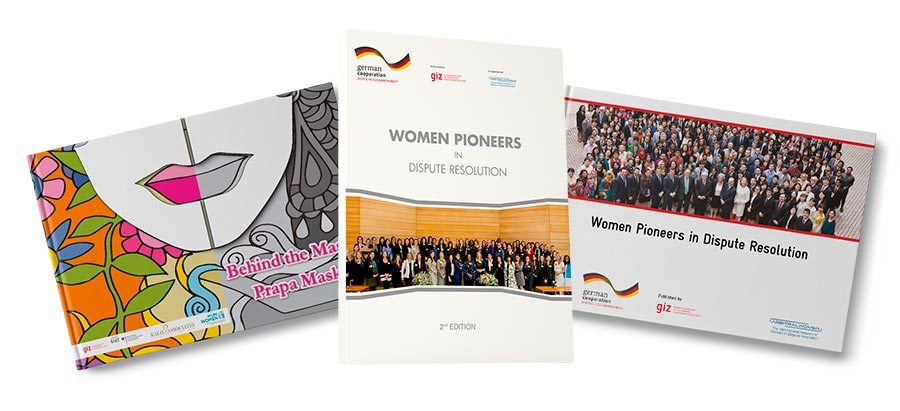
2018-12-06 00:00:00
In a world where women outnumber men and where women are active in all business and legal fields, women remain under-represented in key positions in all fields. The under-representation is not a matter of lack of talented women, but a lack of visibility and recognition. The dispute resolution field benefits from a significant number of talented female practitioners and role models.
 The Women Pioneers in Dispute Resolution book is meant to demonstrate that women are successful, that their path differs from a person to another and that there is no unique way to getting to lead positions. Despite the obstacles female practitioners had to overcome many women have succeeded and have been recognised by their peers. They share their experiences about their careers and opportunities. Some stories demonstrate that irrespective of where in the world they have been working, their challenges have been identical. They succeeded however in breaking down stereotypes and establishing their reputations. The stories also demonstrate the change that has been brought about in society as a result of the work of the storyteller. This book is a tribute not only to the women featured, but also to all women who militated for women’s rights and for equal treatment, especially the ones who remained anonymous. It is an inspiration to all generations.
We owe this book to Adela Llatja and Rezarta Veizaj, and to the Deutsche Gesellschaft für Internationale Zusammenarbeit GmbH (GIZ).
The first book about women published by the GIZ in 2013 was titled “Behind the Masks” (click here to download). It featured 34 anonymous Albanian women wearing Venetian masks and telling their true life stories. The theme of the interviews was “Compromise”, which was chosen for two reasons: first, compromise is the essence of the European Union of which Albania would like to become a member, and second, women rarely have a voice in daily life, and the compromises they make in their lives are often forgotten. The women who prepared the book came from different backgrounds but their common goal was to promote gender equality.
Adela and Rezarta were inspired to continue featuring women within the “Gender Oriented Implementation of the ADR Instruments in the Western Balkan” project. The project’s goal was to support the promotion of alternative dispute settlement mechanisms and particularly to promote the participation of female practitioners. They invited Louise Barrington and Mirèze Philippe to cooperate on this project aimed at featuring women who succeeded in dispute resolution.
The cooperation resulted in the publication in September 2015 of the first edition of the book on Women Pioneers in Dispute Resolution (click here to download). Time was short for the preparation of the book, therefore only 25 women were featured. The book was enthusiastically received, which inspired us to take on the challenge of preparing a second edition, in recognition of how necessary it was to share information about other Women Pioneers.
The second edition of the book on Women Pioneers in Dispute Resolution published in September 2018 was launched in New York on 8 November 2018 during the Gala Dinner celebrating ArbitralWomen 25th Jubilee (click here to download). This second edition features women from a wide geographical coverage: 78 women from nearly 50 countries and from all continents.
The women considered for inclusion in the book are mainly:
The Women Pioneers in Dispute Resolution book is meant to demonstrate that women are successful, that their path differs from a person to another and that there is no unique way to getting to lead positions. Despite the obstacles female practitioners had to overcome many women have succeeded and have been recognised by their peers. They share their experiences about their careers and opportunities. Some stories demonstrate that irrespective of where in the world they have been working, their challenges have been identical. They succeeded however in breaking down stereotypes and establishing their reputations. The stories also demonstrate the change that has been brought about in society as a result of the work of the storyteller. This book is a tribute not only to the women featured, but also to all women who militated for women’s rights and for equal treatment, especially the ones who remained anonymous. It is an inspiration to all generations.
We owe this book to Adela Llatja and Rezarta Veizaj, and to the Deutsche Gesellschaft für Internationale Zusammenarbeit GmbH (GIZ).
The first book about women published by the GIZ in 2013 was titled “Behind the Masks” (click here to download). It featured 34 anonymous Albanian women wearing Venetian masks and telling their true life stories. The theme of the interviews was “Compromise”, which was chosen for two reasons: first, compromise is the essence of the European Union of which Albania would like to become a member, and second, women rarely have a voice in daily life, and the compromises they make in their lives are often forgotten. The women who prepared the book came from different backgrounds but their common goal was to promote gender equality.
Adela and Rezarta were inspired to continue featuring women within the “Gender Oriented Implementation of the ADR Instruments in the Western Balkan” project. The project’s goal was to support the promotion of alternative dispute settlement mechanisms and particularly to promote the participation of female practitioners. They invited Louise Barrington and Mirèze Philippe to cooperate on this project aimed at featuring women who succeeded in dispute resolution.
The cooperation resulted in the publication in September 2015 of the first edition of the book on Women Pioneers in Dispute Resolution (click here to download). Time was short for the preparation of the book, therefore only 25 women were featured. The book was enthusiastically received, which inspired us to take on the challenge of preparing a second edition, in recognition of how necessary it was to share information about other Women Pioneers.
The second edition of the book on Women Pioneers in Dispute Resolution published in September 2018 was launched in New York on 8 November 2018 during the Gala Dinner celebrating ArbitralWomen 25th Jubilee (click here to download). This second edition features women from a wide geographical coverage: 78 women from nearly 50 countries and from all continents.
The women considered for inclusion in the book are mainly:
The Women Pioneers in Dispute Resolution book is meant to demonstrate that women are successful, that their path differs from a person to another and that there is no unique way to getting to lead positions. Despite the obstacles female practitioners had to overcome many women have succeeded and have been recognised by their peers. They share their experiences about their careers and opportunities. Some stories demonstrate that irrespective of where in the world they have been working, their challenges have been identical. They succeeded however in breaking down stereotypes and establishing their reputations. The stories also demonstrate the change that has been brought about in society as a result of the work of the storyteller. This book is a tribute not only to the women featured, but also to all women who militated for women’s rights and for equal treatment, especially the ones who remained anonymous. It is an inspiration to all generations.
We owe this book to Adela Llatja and Rezarta Veizaj, and to the Deutsche Gesellschaft für Internationale Zusammenarbeit GmbH (GIZ).
The first book about women published by the GIZ in 2013 was titled “Behind the Masks” (click here to download). It featured 34 anonymous Albanian women wearing Venetian masks and telling their true life stories. The theme of the interviews was “Compromise”, which was chosen for two reasons: first, compromise is the essence of the European Union of which Albania would like to become a member, and second, women rarely have a voice in daily life, and the compromises they make in their lives are often forgotten. The women who prepared the book came from different backgrounds but their common goal was to promote gender equality.
Adela and Rezarta were inspired to continue featuring women within the “Gender Oriented Implementation of the ADR Instruments in the Western Balkan” project. The project’s goal was to support the promotion of alternative dispute settlement mechanisms and particularly to promote the participation of female practitioners. They invited Louise Barrington and Mirèze Philippe to cooperate on this project aimed at featuring women who succeeded in dispute resolution.
The cooperation resulted in the publication in September 2015 of the first edition of the book on Women Pioneers in Dispute Resolution (click here to download). Time was short for the preparation of the book, therefore only 25 women were featured. The book was enthusiastically received, which inspired us to take on the challenge of preparing a second edition, in recognition of how necessary it was to share information about other Women Pioneers.
The second edition of the book on Women Pioneers in Dispute Resolution published in September 2018 was launched in New York on 8 November 2018 during the Gala Dinner celebrating ArbitralWomen 25th Jubilee (click here to download). This second edition features women from a wide geographical coverage: 78 women from nearly 50 countries and from all continents.
The women considered for inclusion in the book are mainly:
- women who have been active in this field since the 1980s/1990s and are reputed,
- women of younger generations who have been pioneers in this field in their countries and are reputed,
- women who were the first to be appointed at the head of a dispute resolution organisation, or
- women who have been pioneers in starting an organisation or an initiative related to dispute resolution.

2018-12-04 00:00:00
ArbitralWomen (AW) and the Equal Representation in Arbitration Pledge (ERA Pledge) efforts have been having important effects on promoting women practitioners in dispute resolution. Arbitral institutions are publishing both general statistics about gender and other diversity criteria and, in some instances, the names of arbitrators appointed to the cases they administer. However, institutional appointments account for only 25% of all arbitrator appointments. When asked by a client to select an arbitrator, the desirability of promoting diversity is the last feature on anyone’s mind; lawyers are not being asked to make a statement but to pick the best person for the job.
How can gender and diversity be promoted if no feedback exists about the expertise and the efficiency of arbitrators? Can a person-to-person research suffice and is it not subjective? What if the parties have no contacts to call on for information?
Arbitrator Intelligence seeks to promote diversity both by breaking the information bottleneck, and by providing an alternative to the highly subjective, ad hoc nature of arbitrator assessments. The means to these ends is the Arbitrator Intelligence Questionnaire (AIQ). If parties and counsel complete an AIQ at the end of each arbitration, Arbitrator intelligence will compile the collected about arbitrators, analyze it, and compile it into AI Reports on individual arbitrators. These reports will then be made available (for a fee) through our partner, Wolters Kluwer.
To generate this data, Arbitrator Intelligence and ArbitralWomen are calling on parties, counsel, and third-party funders to complete AIQs on recently completed arbitrations.
Do your part! Take a few minutes any day from now until 14 December 2018 to help generate information about women arbitrators by completing an Arbitrator Intelligence Questionnaire (AIQ).
Read the blog here.