
2020-02-05 00:00:00
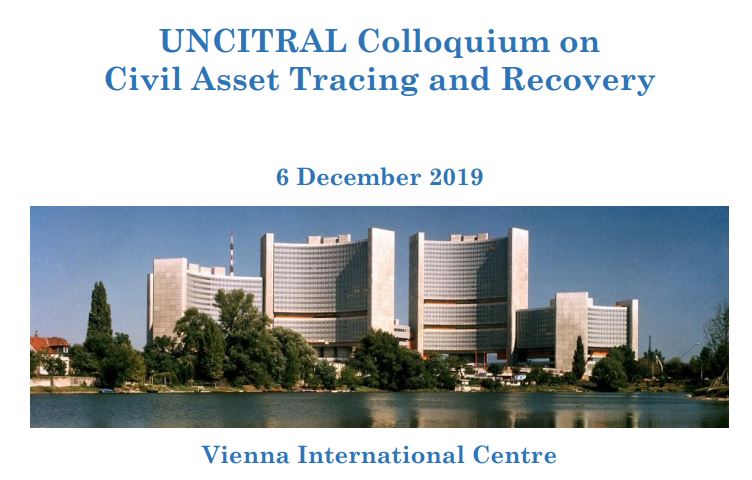
 On 6 December 2019, the United Nations Commission on International Trade Law (UNCITRAL) Working Group V (Insolvency Law) hosted a Colloquium in Vienna on civil asset tracing and recovery. The one-day Colloquium brought together over 100 attendees. This included a select group of international specialists and practitioners to discuss ongoing trends and legal issues around the tracing and recovery of assets in the context of insolvency, fraud and the enforcement of judgements and arbitral awards. The specialists that were present included lawyers, international and intergovernmental organizations, financial institutions, academia, specialist investigators, among others.
One of the main objectives of the Colloquium was to understand how UNCITRAL can contribute to enhancing asset tracing and recovery. Panelists were more or less unanimous in acknowledging the need for a ‘toolkit’ to pool together legal, investigative and strategic solutions by jurisdiction. UNCITRAL can play a role in developing and administrating this toolkit, gathering insight from specialists and making it available to all practitioners.
Observations made by panelists and practitioners included:
On 6 December 2019, the United Nations Commission on International Trade Law (UNCITRAL) Working Group V (Insolvency Law) hosted a Colloquium in Vienna on civil asset tracing and recovery. The one-day Colloquium brought together over 100 attendees. This included a select group of international specialists and practitioners to discuss ongoing trends and legal issues around the tracing and recovery of assets in the context of insolvency, fraud and the enforcement of judgements and arbitral awards. The specialists that were present included lawyers, international and intergovernmental organizations, financial institutions, academia, specialist investigators, among others.
One of the main objectives of the Colloquium was to understand how UNCITRAL can contribute to enhancing asset tracing and recovery. Panelists were more or less unanimous in acknowledging the need for a ‘toolkit’ to pool together legal, investigative and strategic solutions by jurisdiction. UNCITRAL can play a role in developing and administrating this toolkit, gathering insight from specialists and making it available to all practitioners.
Observations made by panelists and practitioners included:
- Timing: In the context of asset recovery, the race against time is a given. The existing Model Law on Insolvency has significantly reduced recovery timelines. It was discussed that a similar procedure should be considered by national courts dealing with non-insolvency related recoveries (including asset recoveries related to fraud and the enforcement of judgements and arbitral awards) allowing for these to take priority, acknowledging that money and other assets move fast.
- Funding: asset recovery is by nature international and costly. Lack of funding remains one of the main hinderances to recovery. In some jurisdictions, champerty laws remain a firm barrier to third party funding for asset recovery. It was discussed how funding should be made more readily available for investment in well-coordinated asset recovery strategies.
- Range of legal systems and practices: Given the multijurisdictional nature of asset recovery, being able to take advantage the tools offered by each individual jurisdiction can make for more efficient and effective recovery/enforcement. Discussions centered around differences between Common law vs. Civil law with their varying range of injunctive relief (e.g., discovery/disclosure applications, pre-judgement attachment procedures, among others); the use of criminal proceedings to advance civil claims (e.g., Switzerland); legal access to centralized registries of bank accounts (e.g., Fichier des Comptes Bancaires ‘FICOBA’ in France); publicly available information and registries (the UBO registries in the EU); the use of bankruptcy and insolvency proceedings in asset recovery. The potential advantages of ‘Forum shopping’ were also discussed.
- Type of assets and complexities of ownership: Assets may take many forms ranging from a property to a receivable from a third party. While there are legal and investigative tactics that can be used to identify them, the mechanisms for concealing assets continue to grow more sophisticated. Cryptocurrencies and the challenges that exist to their recovery had a center stage in discussions. It was also discussed how basic search tools can be made more widely available to practitioners.
|

2020-02-05 00:00:00
 From 20 to 24 January 2020, the United Nations Commission on International Trade Law (UNCITRAL) Working Group III (‘Working Group’) held its thirty-eighth session in Vienna (Austria).
As reported in previous AW report on the Working Group’s thirty-seventh session (https://arbitralwomen.org/uncitral-working-group-iii-moves-forward-on-isds-reform/), the Working Group’s mandate includes three steps:
From 20 to 24 January 2020, the United Nations Commission on International Trade Law (UNCITRAL) Working Group III (‘Working Group’) held its thirty-eighth session in Vienna (Austria).
As reported in previous AW report on the Working Group’s thirty-seventh session (https://arbitralwomen.org/uncitral-working-group-iii-moves-forward-on-isds-reform/), the Working Group’s mandate includes three steps:
- the identification and consideration of concerns regarding investor-state dispute settlement (ISDS);
- consideration of whether reform was desirable in light of any identified concerns; and
- if the Working Group were to conclude that reform was desirable, developing any relevant solutions to be recommended to the Commission.
- A multilateral advisory centre and related capacity-building activities (based on document A/CN.9/WG.III/WP.168);
- A code of conduct (based on document A/CN.9/WG.III/WP.167); and
- Third-party funding (based on document A/CN.9/WG.III/WP.172).
- A stand-alone review or appellate mechanism;
- A standing multilateral investment court; and
- A selection and appointment of arbitrators and adjudicators.
Attendance to the resumed thirty-eight session
In addition to the 56 States Members of the Commission, the thirty-eighth session also was attended by 41 States as observers along with observers representing the European Union, the International Centre for the Settlement of Investment Disputes (ICSID), the United Nations Conference on Trade and Development (UNCTAD), the African Union, the Asian-African Legal Consultative Organisation (AALCO), the Commonwealth Secretariat, the Eurasian Economic Commission, the Gulf Cooperation Council (GCC), the Maritime Organisation of West and Central Africa (MOWCA), the Organization for Economic Cooperation and Development (OECD), the Permanent Court of Arbitration (PCA) and the South Centre. ArbitralWomen was also represented among the large number of invited non-governmental organizations.Calendar
The next UNCITRAL Working Group III session will be held in New York from 30 March to April 2020. Three parallel events of interest were also announced at the end of the session:- the government of the People’s Republic of China proposed to host an inter-sessional meeting on international mediation in Hong Kong Special Administrative Region, China during the first week of June 2020;
- A joint workshop with OECD on the topic of reflective loss and shareholder claims, tentatively scheduled for early July; and
- the Secretariat was planning to hold a roundtable dialogue in cooperation with the International Chamber of Commerce (ICC) during the first half of 2020 to obtain the views of the investors with regard to the reform options being discussed by the Working Group.
2020-01-28 00:00:00
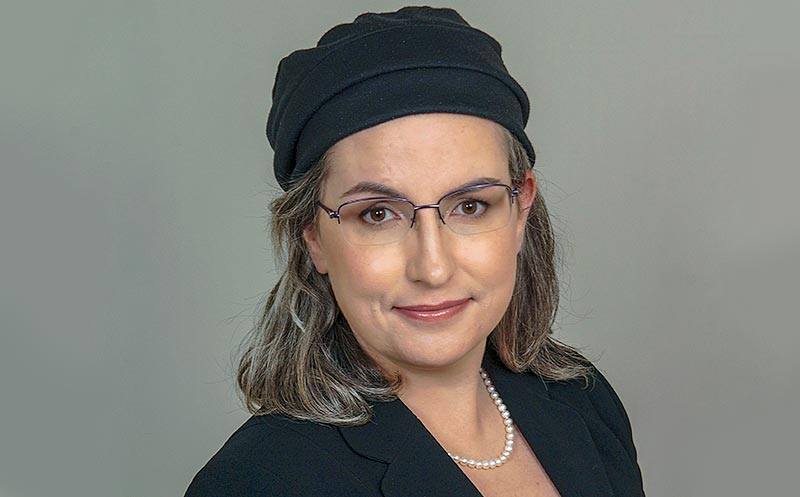
Dr Katherine Simpson, international arbitrator and legal scholar, has called on the Parties to the Comprehensive Economic and Trade Agreement between Canada, the European Union and its member states (CETA), to remedy the serious under-representation of women in the agreed roster of arbitrators for dispute settlement under Article 29 of the CETA (“CETA List”). In that list, 50% of the Canadian, 20% of the EU, and 0% of the Chairperson roster nominees are female.
In response, Dr Simpson searched for equally qualified women who could be eligible to add to the CETA List. In January 2020, Simpson provided the Treaty Parties the professional credentials of 70 experienced women trade experts whose skills and qualifications matched at least one person currently on the CETA List. Her substantial research demonstrated what many already know to be true: there is no shortage of qualified women in international trade law, or in international dispute resolution, generally.
Fortunately, there are no legal barriers preventing the Parties from remedying the gender imbalance created in the previously agreed CETA List. Article 29 of the CETA sets fifteen (15) as a minimum number of roster members; Simpson has proposed that the CETA Joint Committee add additional female roster members until gender parity is achieved.
The gender imbalance in the CETA List took many by surprise. Gender equality has been a priority for the European Commission and for the CETA Joint Committee, which even issued an official agreement in 2018 to “improve the capacity and conditions for women… to access and fully benefit from the opportunities created by the CETA”. The Treaty Parties convened a conference and a workshop dedicated to ensuring that women would benefit from the opportunities created by the CETA and international trade. Overall, the CETA List appeared to many as a step backward; it preserved the gender imbalance that the CETA Parties and the von der Leyen Commission have publicly sought to eliminate.
In an interview with Dr Simpson in Houston on 24 January 2020 at the 6th Annual ITA-IEL-ICC Joint Conference on International Energy Arbitration, ArbitralWomen had the opportunity to discuss her initiative to identify equally well-qualified women to serve on the CETA List of Arbitrators. The salient points of the interview appear below.
ArbitralWomen is grateful for the opportunity to sit down with Dr Simpson to learn the behind-the-scenes effort involved in this arguably ground-breaking diversity initiative. The list of qualified women that Dr Simpson submitted to the CETA Joint Committee has been well-received in many circles. Regardless of what happens next with respect to the CETA List, it is a tremendous achievement that in less than two weeks, 70 women were brought to the spotlight and demonstrated their credentials to the world. While Dr Simpson mentioned that many women inspired her to pursue this project, we take this opportunity to recognize Dr Simpson herself as an inspiration to those of us who seek to promote women and diversity in dispute resolution. The submissions by Dr Simpson together with the annexes containing the research and alphabetical list of qualified women to the CETA Joint Committee and the Council of the European Union are available at https://www.simpsonadr.net/pro-bono.php. Submitted by Dana MacGrath, ArbitralWomen President
QUESTION: International trade law is a niche area that is distinct from international investment and commercial arbitration. What prompted or inspired you to take on this initiative to demonstrate to the CETA Parties – and the international dispute resolution community generally – that the gender imbalance in the CETA List can (easily) be remedied? Why did you do this?
ANSWER: When I saw the December 2019 CETA Arbitrator List, I was truly surprised and disappointed. I promptly volunteered to the international community on OGEMID to find at least a dozen women. Within a few days, after talking with several colleagues, it became a “put your money where your mouth is” project. I was confident that qualified women existed and that by compiling them into a list, I could prove these women are find-able: it is really up to the researcher to see them. Further, on a practical level, these rosters are important. Treaty-based rosters of arbitrators serve as public verification of the roster members’ credentials, backed by public accountability. The credence given to these lists is enormous. Gender parity in treaty-based lists of arbitrators can be a powerful step toward achieving gender parity in international dispute resolution, generally.
QUESTION: What was the most troublesome aspect of the CETA List?
ANSWER: First, its authorship. Canada and the EU have made wonderful public statements and programs in favour of gender equality, and the fact that the legal teams of both had been unable to find a single female Chairperson candidate basically communicated that no such woman exists. And that was consistent with an oft-repeated explanation for gender imbalance – the “there just aren’t many who are qualified” or “they are just so hard to find” and “we really are few and far between”-es. This baseless stereotype is the go-to explanation for everything from arbitrator appointments to the underrepresentation of women in leadership roles. And then, there’s the “es gibt doch immer einen wirtschaftlichen Grund” or “there’s always an economic reason for the choice.” I wondered whether I could provide meaningful assistance by making it easier for them to find highly qualified female candidates. I thought the most meaningful and immediate way for me to assist would be to actually identify qualified candidates, by reference to their existing choices. The European Commission welcomed this and provided me the email addresses for the list, and I have offered to provide them my research steps, as well.
QUESTION: Tell us about the research that went into this?
ANSWER: My goal was to create a list of qualified female candidates who were comparable to the arbitrators already included on the CETA List. I accepted the Treaty Parties’ deliberate candidate choices and proposed only candidates who matched their qualifications. First, to find and later recommend women who were truly comparable, I examined the people currently on the CETA List to understand what qualifications made each a valued member of that List. I discovered that each person who had been selected for the CETA roster (and was, therefore, agreed by the Treaty Parties as having “specialised knowledge of international trade law”) had legal experience with the WTO or taught and published about the WTO. The CETA List members could be organized by their skills and experiences, as follows:The CETA List treats each of these experiences as equal to one another. This non-hierarchal list of qualifying credentials is helpful because CETA Arbitrators with one of the identified credentials often had experiences in the other categories of qualifying credentials. Additionally, further experience was noted:
- Four (4) CETA Arbitrators had served on the WTO Appellate Body;
- Five (5) CETA Arbitrators have experience as a panellist in dispute resolution proceedings at the WTO;
- Four (4) CETA Arbitrators have served as counsel to parties in a WTO dispute or as counsel to the WTO itself; and
- Three (3) CETA Arbitrators have academic teaching and publications related to the WTO.
I used the WTO (as outlined) as a baseline variable and I searched for women who had “specialised knowledge of international trade law” evidenced by experience with the WTO or academic expertise related to it. Second, my search for qualified women was supported by one commitment and one assumption. I committed to writing down the name of every qualified female I came across. Next, I assumed that if an ethnic, regional, or demographic group was over-represented, it would indicate a failure in my search, as opposed to a shortage of other practitioners. Third, I asked colleagues for recommendations and reviewed edited publications and international trade organization memberships for names. I used gender-neutral searches in Google. In addition, I asked for recommendations from 210 women who were identified through the recommendations of colleagues and through the Internet searches. The 70 qualified women identified in the submissions to the CETA Joint Committee were each peer recommended (not one woman on the list nominated herself), agreed to be listed, and worked with me to draft their professional credentials.
- Thirteen (13) CETA Arbitrators have had academic appointments
- Twelve (12) CETA Arbitrators have expert or counsel experience in international trade matters;
- Eight (8) have experience in international commercial or investment arbitration;
- Three (3) CETA Arbitrators reported experience in treaty negotiation.
- Some or all of the CETA Arbitrators may have once served as counsel to one of the Treaty Parties.
QUESTION: What were the hardest parts of this initiative to find qualified women for the CETA List?
ANSWER: Having to turn people away who did not have what I understand to be the requisite qualifications for the CETA List but were otherwise impressive dispute resolution lawyers. Those were difficult conversations, but necessary. I believe that the women who I did not include on the list would all perform well in a trade dispute, but my goal was to provide a list of women with as close a match to the skills and experiences of those on the CETA List as possible. Therefore, I felt it necessary to not include several senior women who did not fit into the WTO category. Throughout this project, the women with whom I connected were helpful and inspirational. In the end, this was a 70+ person group writing project, that was completed in a 10-day period, over what counts as the New Year holiday for many. Every day presented a new challenge and with it, additional inspiration. Each woman worked with me individually (from far-flung locations at all hours of the day or night) to prepare her text for the submission (at the suggestion of one of the women: who better than the qualified woman herself to draft her experience?). Working with these women to memorialize their experience to submit to the CETA Joint Committee was rewarding and energizing. It brought me into contact with some phenomenal women and kept me committed to the project.
QUESTION: Why did you limit this project to 10 days?
ANSWER: While I was undertaking my research and preparing the list (and after I spoke with the European Commission and received their invitation to make a submission), the CETA Joint Committee and the European Commission again sought a decision from the Council of the EU consenting to the CETA List roster. I wanted this submission to be considered by the Council of the EU before they made their decision, so it was a time-sensitive matter.
QUESTION: Do you ever see yourself undertaking this kind of project again?
ANSWER: I am committed to gender parity more than ever after this experience. This work needs to be done. And I am inspired to do more of it.
QUESTION: Tell us, what will you do next for women in dispute resolution?
ANSWER: I am currently preparing another roster for an arbitral institution, and that one is focused not on gender but on ethnic imbalance. In the near future, I might prepare an investor-state list or work with others to create one. The European Commission attributed the gender imbalance in the CETA List to its reliance on Member State recommendations and rosters already in place in other EU trade agreements. In reviewing those other rosters, it is clear that the gender imbalance in the CETA List was not an isolated accident: women account for only 12.9% of all EU arbitrator roster appointments since 2011, and only 10.6% since 2015. In two thirds of the EU’s trade agreement dispute settlement rosters since 2011, the EU proposed no women at all. Regardless of how one feels about the proposed multilateral court, if the EU decides to rely on Member State recommendations or already in place investor-state rosters to establish it, we can expect the same results: EU Member States have named only 19 women to the ICSID roster of arbitrators (out of a total of 99 nominees: 19%, with 13 member states nominating only men to its panel roster (2 states made no nominations). The European Commission has provided me with its negotiating directives for the proposed court. I hope to connect with them to establish the characteristics they would like to see in arbitrators for that court.
QUESTION: What can ArbitralWomen and other organisations focused on diversity do to help?
ANSWER: Once I establish the baseline parameters for an ISDS list, I hope that ArbitralWomen can contribute to the effort to identify qualified female candidates – not only by suggesting names of qualified women, but by sending out a call to its Membership so that each woman can evaluate whether she is a potential candidate for that list and if so, put her name forward. ArbitralWomen Members can continue to keep themselves visible by publishing and networking with both men and women. We can have our own mental rosters of “if I were to recommend 10 women for a construction dispute or a dispute resolution board, they would be …” Be ready to recommend a colleague!
ArbitralWomen is grateful for the opportunity to sit down with Dr Simpson to learn the behind-the-scenes effort involved in this arguably ground-breaking diversity initiative. The list of qualified women that Dr Simpson submitted to the CETA Joint Committee has been well-received in many circles. Regardless of what happens next with respect to the CETA List, it is a tremendous achievement that in less than two weeks, 70 women were brought to the spotlight and demonstrated their credentials to the world. While Dr Simpson mentioned that many women inspired her to pursue this project, we take this opportunity to recognize Dr Simpson herself as an inspiration to those of us who seek to promote women and diversity in dispute resolution. The submissions by Dr Simpson together with the annexes containing the research and alphabetical list of qualified women to the CETA Joint Committee and the Council of the European Union are available at https://www.simpsonadr.net/pro-bono.php. Submitted by Dana MacGrath, ArbitralWomen President
2020-01-18 00:00:00
[caption id="attachment_75657" align="alignright" width="677"]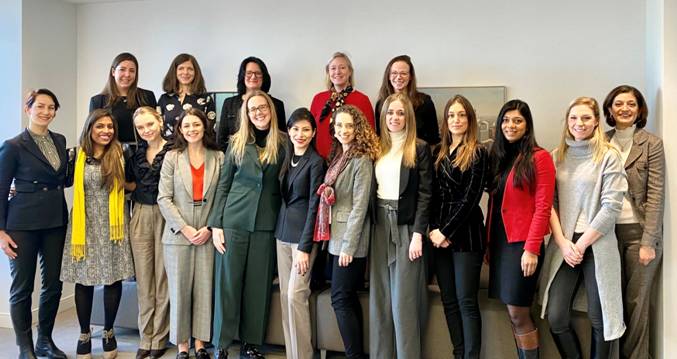
AGM hosted at Chaffetz Lindsey in New York
Back row L to R: Matilde Flores, Lauren Friedman, Conna Wiener, Dana MacGrath, Erin Valentine
Front row L to R: Jadranka Jakovic, Rekha Rangachari, Sara Chojecki, Rebecca Meyer, Erin Gleason, Rebeca Mosquera, Lilian Marques, Agustina Alfaro,Pilar Colomes less, Gigi D’Souza, Gretta Walters, Caline Mouawad[/caption] [caption id="attachment_75666" align="alignright" width="602"]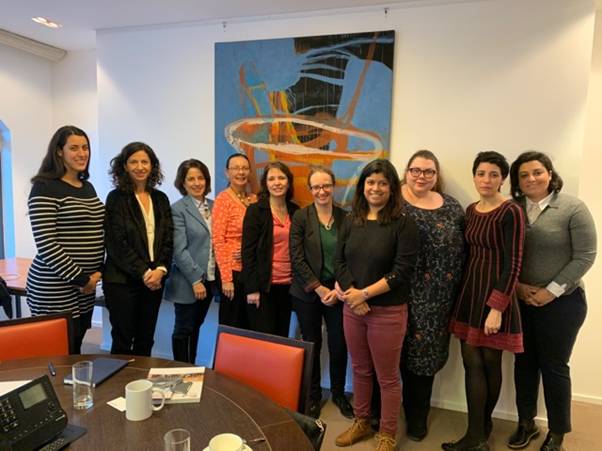 AGM hosted at Freshfields in Paris
L to R: Cherine Foty, Marily Paralika, Pascale Lorfing, Mirèze Philippe, Maria Beatriz Burghetto, Gisème Stephen-Chu, Trisha Mitra, Anna Guillard Sazhko, Affef ben Mansour, Sara Koleilat-Aranjo[/caption] The ArbitralWomen Annual General Meeting (AGM) took place on 17 January 2020. Members participated telephonically from around the world, and, in some cities gathered in person. ArbitralWomen is grateful to our Members at several firms who graciously offered to host the in-person gathering of local members in Geneva at King & Spalding, in London at NERA Economic Consulting, in New York at Chaffetz Lindsey and in Paris at Freshfields. The meeting lasted approximately one hour. Dana MacGrath as President delivered welcome remarks and Louise Woods as Secretary conducted the AGM. Several members of the Board delivered committee reports on ArbitralWomen’s activities in 2019. Juliette Fortin delivered the Treasury report. Mirèze Philippe delivered the Membership Committee report, noting an increase of more than 200 members since last year and that more than 50 firms are corporate members. Dana MacGrath delivered the report on ArbitralWomen News activities (our periodic News Alerts, news webpage and Members’ News) noting that ArbitralWomen published more than 80 news items on our Members’ professional achievements and more than 25 articles on developments in dispute resolution on our ArbitralWomen News webpage. Maria Beatriz Burghetto, who has joined Erika Williams as co-Director of the Newsletter Committee, delivered the report on the committee’s work, noting that six Newsletters were published in 2019, with two special edition Newsletters – one on the 2018 Jubilee Celebrations and the other on the 2019 Vienna AGM and Vis Moot. She explained that the other Newsletters typically included an interview with a leading female practitioner or arbitrator, reports on events submitted by Members, and a section on “diversity initiatives in the workplace.” Marily Paralika delivered the Events Committee report, noting that Vanina Sucharitkul has joined her in coordinating the events work. She noted that in 2019 there were 71 events, of which 28 were in Europe, 6 in South/Central America, 20 in North America, 1 in Africa and 16 in Asia/Oceania. She also reported that in 2019 ArbitralWomen held events for the first time in Istanbul, Kiev, Kuala Lumpur and Guanxi, China. This was a record number of events. Amanda Lee delivered the Mentorship Committee report. She noted that there has been an increase in participation in the mentorship programme and that at least 6 new ArbitralWomen members joined this year specifically to participate in the AW mentorship programme. She noted that in 2020 we will try to increase the visibility of the mentorship programme so that more Members can learn of it and benefit from participating. Mirèze Philippe delivered the report on behalf of the ArbitralWomen Diversity ToolkitTM Taskforce, noting that a number of trainings had been delivered in 2019 in the US and Canada. In 2020, we seek to deliver the ArbitralWomen Diversity ToolkitTM training sessions to additional countries. Rekha Rangachari, a member of the ArbitralWomen Diversity ToolkitTM Task Force, provided some insights into the trainings that had been delivered in New York (for which she was one of the trainers) and in Miami. Members were assured that all the committee reports, including reports from committees that did not present during the AGM, will be circulated to the Members together with the minutes of the AGM. Following the committee reports, Dana MacGrath provided a high-level overview of the ArbitralWomen Board election process that will take place in May and June 2020. Members are eligible to run for the Board if they have been an ArbitralWomen Member for at least one year before the Call for Nominations. In the first week of May 2020, the Secretary shall issue a Call for Nominations for Election to the Board. Nominations shall be submitted within 15 days. Nominees shall submit an acceptance in writing with supporting materials within 7 days of nomination. Thereafter, the Secretary shall issue a Call for Votes that includes the list of eligible candidates. The election shall take place by secret ballot over a period of not more than 7 days. The Secretary shall announce to Members who has been elected to the Board at the earliest opportunity following the election, ideally in mid or late June 2020. It was assured that all these details and more would be set out in formal notices about the election closer to the date. During the Q&A / Discussion period, several Members offered suggestions on how to reach out to in-house counsel to include them in ArbitralWomen membership. Further brain-storming continued after the official close of the meeting at in-person venues. As a result, we have several potential new initiatives in the pipeline for 2020! Submitted by Dana MacGrath, ArbitralWomen President and Bentham IMF Investment Manager
AGM hosted at Chaffetz Lindsey in New York
Back row L to R: Matilde Flores, Lauren Friedman, Conna Wiener, Dana MacGrath, Erin Valentine
Front row L to R: Jadranka Jakovic, Rekha Rangachari, Sara Chojecki, Rebecca Meyer, Erin Gleason, Rebeca Mosquera, Lilian Marques, Agustina Alfaro,Pilar Colomes less, Gigi D’Souza, Gretta Walters, Caline Mouawad[/caption] [caption id="attachment_75666" align="alignright" width="602"]
AGM hosted at Freshfields in ParisL to R: Cherine Foty, Marily Paralika, Pascale Lorfing, Mirèze Philippe, Maria Beatriz Burghetto, Gisème Stephen-Chu, Trisha Mitra, Anna Guillard Sazhko, Affef ben Mansour, Sara Koleilat-Aranjo[/caption] The ArbitralWomen Annual General Meeting (AGM) took place on 17 January 2020. Members participated telephonically from around the world, and, in some cities gathered in person. ArbitralWomen is grateful to our Members at several firms who graciously offered to host the in-person gathering of local members in Geneva at King & Spalding, in London at NERA Economic Consulting, in New York at Chaffetz Lindsey and in Paris at Freshfields. The meeting lasted approximately one hour. Dana MacGrath as President delivered welcome remarks and Louise Woods as Secretary conducted the AGM. Several members of the Board delivered committee reports on ArbitralWomen’s activities in 2019. Juliette Fortin delivered the Treasury report. Mirèze Philippe delivered the Membership Committee report, noting an increase of more than 200 members since last year and that more than 50 firms are corporate members. Dana MacGrath delivered the report on ArbitralWomen News activities (our periodic News Alerts, news webpage and Members’ News) noting that ArbitralWomen published more than 80 news items on our Members’ professional achievements and more than 25 articles on developments in dispute resolution on our ArbitralWomen News webpage. Maria Beatriz Burghetto, who has joined Erika Williams as co-Director of the Newsletter Committee, delivered the report on the committee’s work, noting that six Newsletters were published in 2019, with two special edition Newsletters – one on the 2018 Jubilee Celebrations and the other on the 2019 Vienna AGM and Vis Moot. She explained that the other Newsletters typically included an interview with a leading female practitioner or arbitrator, reports on events submitted by Members, and a section on “diversity initiatives in the workplace.” Marily Paralika delivered the Events Committee report, noting that Vanina Sucharitkul has joined her in coordinating the events work. She noted that in 2019 there were 71 events, of which 28 were in Europe, 6 in South/Central America, 20 in North America, 1 in Africa and 16 in Asia/Oceania. She also reported that in 2019 ArbitralWomen held events for the first time in Istanbul, Kiev, Kuala Lumpur and Guanxi, China. This was a record number of events. Amanda Lee delivered the Mentorship Committee report. She noted that there has been an increase in participation in the mentorship programme and that at least 6 new ArbitralWomen members joined this year specifically to participate in the AW mentorship programme. She noted that in 2020 we will try to increase the visibility of the mentorship programme so that more Members can learn of it and benefit from participating. Mirèze Philippe delivered the report on behalf of the ArbitralWomen Diversity ToolkitTM Taskforce, noting that a number of trainings had been delivered in 2019 in the US and Canada. In 2020, we seek to deliver the ArbitralWomen Diversity ToolkitTM training sessions to additional countries. Rekha Rangachari, a member of the ArbitralWomen Diversity ToolkitTM Task Force, provided some insights into the trainings that had been delivered in New York (for which she was one of the trainers) and in Miami. Members were assured that all the committee reports, including reports from committees that did not present during the AGM, will be circulated to the Members together with the minutes of the AGM. Following the committee reports, Dana MacGrath provided a high-level overview of the ArbitralWomen Board election process that will take place in May and June 2020. Members are eligible to run for the Board if they have been an ArbitralWomen Member for at least one year before the Call for Nominations. In the first week of May 2020, the Secretary shall issue a Call for Nominations for Election to the Board. Nominations shall be submitted within 15 days. Nominees shall submit an acceptance in writing with supporting materials within 7 days of nomination. Thereafter, the Secretary shall issue a Call for Votes that includes the list of eligible candidates. The election shall take place by secret ballot over a period of not more than 7 days. The Secretary shall announce to Members who has been elected to the Board at the earliest opportunity following the election, ideally in mid or late June 2020. It was assured that all these details and more would be set out in formal notices about the election closer to the date. During the Q&A / Discussion period, several Members offered suggestions on how to reach out to in-house counsel to include them in ArbitralWomen membership. Further brain-storming continued after the official close of the meeting at in-person venues. As a result, we have several potential new initiatives in the pipeline for 2020! Submitted by Dana MacGrath, ArbitralWomen President and Bentham IMF Investment Manager
2020-01-14 00:00:00
The new Board of Directors of the Vienna International Arbitral Centre for the 2020-2022 term includes five female members out of a total of fifteen Board members. Four women have been elected to the Board for the first time, including ArbitralWomen Members Patrizia Netal, Lucia Raimanova and Natalie Voser together with Claudia Annacker. ArbitralWomen Member Irene Welser has been re-elected for the term 2020-2022.
The list of newly-elected VIAC Board members can be found here.
Statistics about VIAC’s caseload and arbitrators, including the proportion of female arbitrators, can be found here.
Submitted by Dana MacGrath, Bentham IMF and ArbitralWomen Board President
2020-01-09 00:00:00
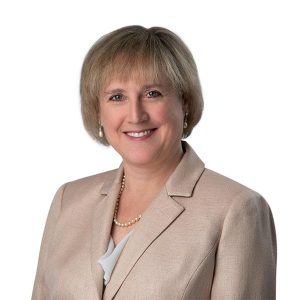
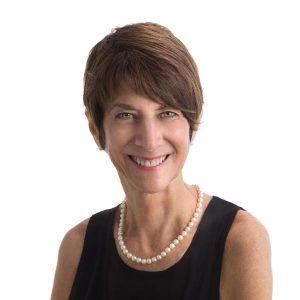
Arbitration Chambers, a leading consortium of independent arbitrators, recently announced the launch of a New York office and the addition of ArbitralWomen Members Jean E. Kalicki and Lucy F. Reed, both world-renowned international commercial and investor-state arbitrators.
Arbitration Chambers was established in 2012 in Hong Kong and expanded to London in 2017. Opening in New York gives Arbitration Chambers a presence in three of the world’s leading centres for arbitration. Arbitration Chambers is a set of independent arbitrators dedicated solely to the field of international arbitration. Its members hail from both common law and civil law jurisdictions around the world.
“The launch in New York by Arbitration Chambers as its third global location reflects the importance of New York as a seat of international arbitration and global commercial centre,” commented ArbitralWomen Member Edna Sussman, independent arbitrator and Chair of the Board of Directors of the New York International Arbitration Center (NYIAC). “We are thrilled to have Jean Kalicki and Lucy Reed as representatives of New York’s impressive bench of leading arbitrators.”
“The choice of New York by Arbitration Chambers is momentous, reaffirming the strength and influence of the international arbitration community here,” commented ArbitralWomen Member Rekha Rangachari, Executive Director of NYIAC. “I am delighted to welcome Arbitration Chambers to New York and look forward to opportunities for collaboration.”
Jean Kalicki, a long-standing Member and supporter of ArbitralWomen, is recognized as one of the top U.S.–based international arbitrators specializing in investor-state, international and complex commercial disputes. Until April 2016, she was a partner at Arnold & Porter LLP, serving as counsel in a wide range of high-stakes international matters.
Lucy Reed, a long-standing Member and supporter of ArbitralWomen, is one of the highest profile international arbitrators in the world. The former head of international arbitration at Freshfields, based in the firm’s New York, Hong Kong and Singapore offices, Reed became an independent arbitrator in 2016 while undertaking the roles of Director of the Centre for International Law and Professor at the National University of Singapore (NUS), where she taught international arbitration and conciliation of public international law disputes through December 2019, prior to returning to New York.
With the addition of Jean Kalicki and Lucy Reed in New York, Arbitration Chambers now has four female members among a total of seventeen arbitrators; ArbitralWomen Member Juliet Blanch is based in London and ArbitralWomen Member Chiann Bao is based in Hong Kong.
To learn more, please follow the link to the Arbitration Chambers press release announcing its New York office launch and addition of ArbitralWomen Members Jean Kalicki and Lucy Reed.
Submitted by Dana MacGrath, ArbitralWomen President and Bentham IMF.
 |
 |